


 English
 русский
 Español
 عربى
عربى Português
Zhongchi
Zhongchi
Zhongchi
Zhongchi
Zhongchi
Zhongchi
Zhongchi
Zhongchi
Zhongchi
Vertical piping creates a different operating condition for a check valve. Gravity affects the movement of the internal disc, so a threaded swing check valve cannot simply be installed in every vertical line without checking the flow direction and valve design.
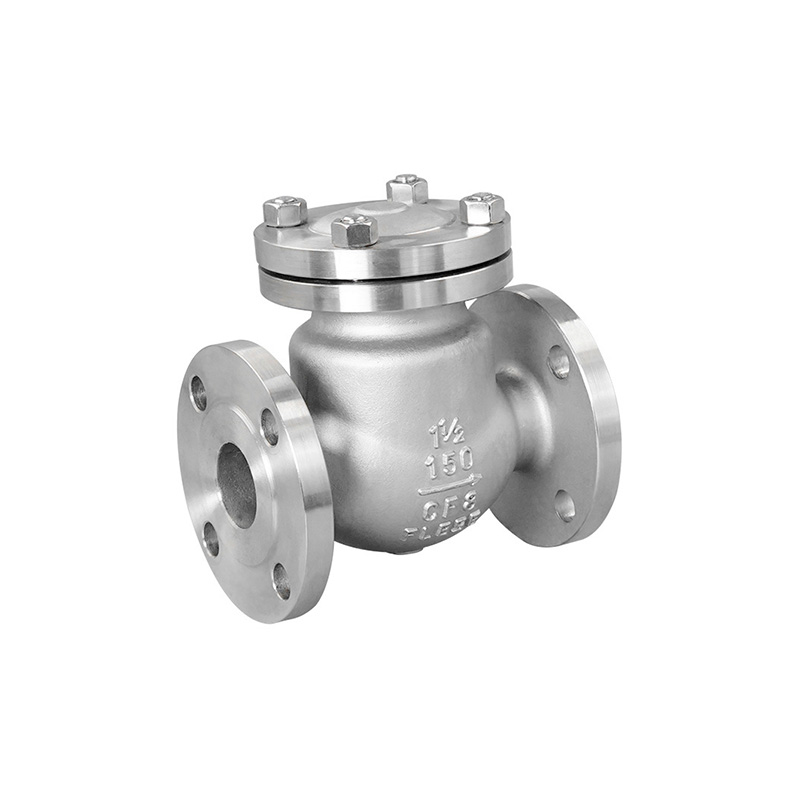
Zhongchi considers flow orientation as an important part of check valve configuration. A swing check valve uses a hinged disc that moves away from the seat under forward flow and returns toward the sealing surface as flow decreases or reverses. Gravity can assist this movement, but its effect changes significantly between horizontal, vertical-upward, and vertical-downward installations.
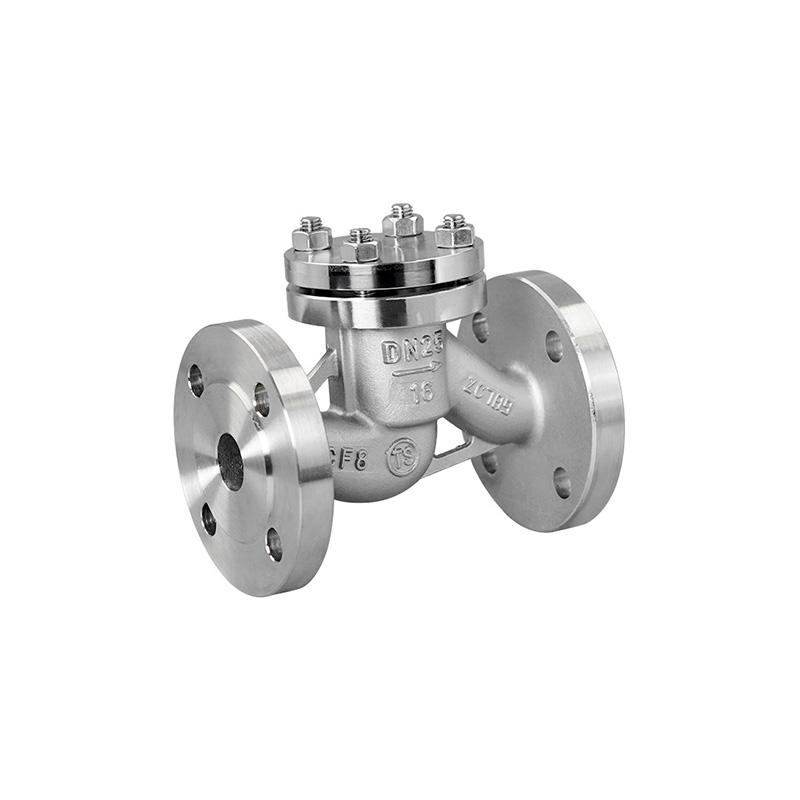
Why Does Vertical Flow Change Disc Movement?
The disc inside a swing check valve is connected to a hinge. Forward pressure pushes the disc open, while gravity and reverse pressure help return it toward the seat. Such a mechanism works naturally in many horizontal installations because the disc can swing freely and gravity assists closure.
Vertical piping creates a different relationship between the disc and gravity. Upward flow can lift the disc from the seat, while gravity can help bring it back toward the closed position after flow stops. This operating principle is why various swing check valve designs permit vertical installation with upward flow. Technical installation documents also specify upward flow for vertical applications.
Vertical-Upward Flow
- Forward flow: Fluid pressure lifts the hinged disc away from the seat.
- Flow stops: Gravity helps the disc return toward the sealing position.
- Reverse flow: Back pressure pushes the disc against the seat to restrict reverse movement.
This arrangement can work well, provided the specific valve is approved for vertical-upward service.
Why Is Downward Flow More Difficult?
Vertical downward flow presents a different mechanical condition. Gravity can pull the hinged disc in the same direction as the downward flow rather than helping it close. Such behavior may delay seating or prevent reliable closure after forward flow stops.
A vertical downward installation should therefore never be assumed suitable simply because the valve has threaded connections. Installation documentation for swing check valves commonly limits vertical service to upward flow.
Threaded Connections Add Their Own Requirements
Threaded construction is useful for compact piping systems because the valve can connect directly to compatible threaded pipe or fittings. Common configurations may use female NPT connections, while other thread standards are available according to project requirements.
Connection compatibility deserves attention before installation. Pipe thread size, thread standard, sealant selection, valve body material, and pressure rating all need to match the surrounding piping system.
- Thread standard: Confirm NPT, BSP, or another specified standard before ordering.
- Nominal size: Match the valve connection with the actual pipe size.
- Flow arrow: Follow the arrow marked on the valve body rather than relying on visual assumptions.
- Sealing method: Use a compatible thread sealant or PTFE tape according to the piping specification.
Does Flow Rate Affect Swing Check Valve Behavior?
Flow velocity also influences disc movement. Excessively low flow may not hold the disc fully open, while unstable flow can cause repeated disc movement or chatter. Such behavior may increase wear on the seat and internal hinge components.
Some technical guidance recommends maintaining sufficient differential pressure across a swing check valve to achieve stable operation and reduce chatter or water hammer.
Zhongchi therefore evaluates more than nominal pipe diameter. Actual flow rate, pressure differential, medium characteristics, installation orientation, and expected flow fluctuations can all influence the suitability of a threaded swing check valve.
Key Parameters to Review
- Pipe size: Common threaded designs may cover compact sizes such as 1/2 inch to 2 inches, depending on configuration.
- Working pressure: Verify the rated pressure against the actual system pressure and temperature.
- Medium: Water, oil, air, gas, and chemical fluids can require different body and sealing materials.
- Installation direction: Confirm whether horizontal or vertical-upward service is permitted by the specific design.
- Flow stability: Pump pulsation and rapid flow changes should be considered during valve configuration.
How Zhongchi Evaluates Vertical Applications
Zhongchi does not treat every threaded swing check valve as suitable for every pipe orientation. Valve geometry, hinge arrangement, body construction, connection standard, pressure rating, and flow direction all form part of the application assessment.
Horizontal piping generally provides a straightforward operating arrangement. Vertical-upward piping can also be suitable for compatible swing check valve designs, provided the body arrow points upward and the internal disc has sufficient freedom to operate. Manufacturer documentation should be consulted before placing a valve into a vertical line.
Providing Zhongchi with pipe size, flow direction, working pressure, temperature, medium, and installation orientation helps establish the appropriate check valve configuration. Such information gives the valve design a clear operating target rather than treating vertical installation as a simple connection detail.