


 English
 русский
 Español
 عربى
عربى Português
Zhongchi
Zhongchi
Zhongchi
Zhongchi
Zhongchi
Zhongchi
Zhongchi
Zhongchi
Zhongchi

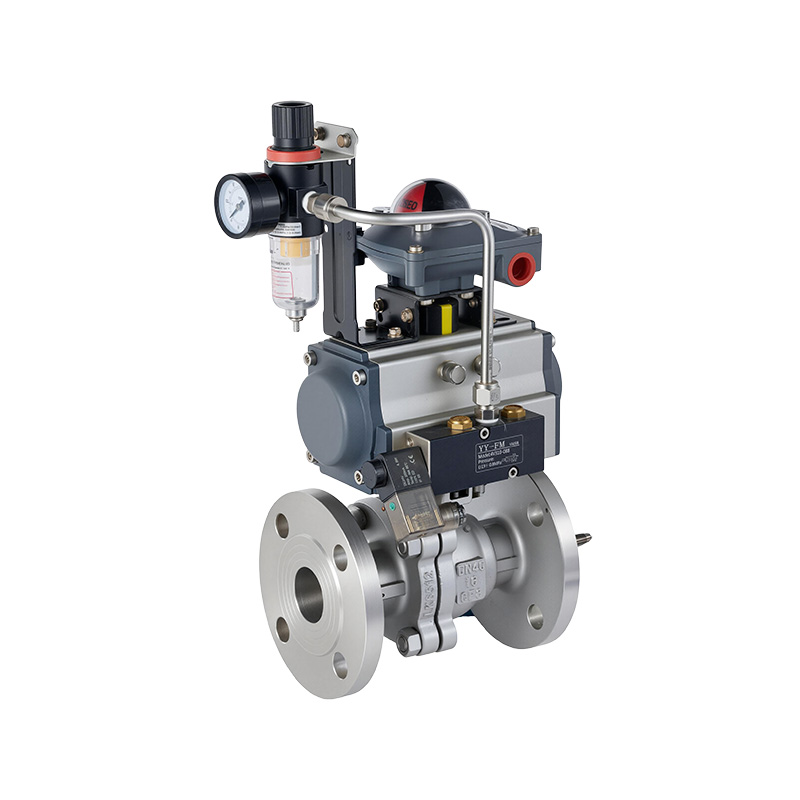
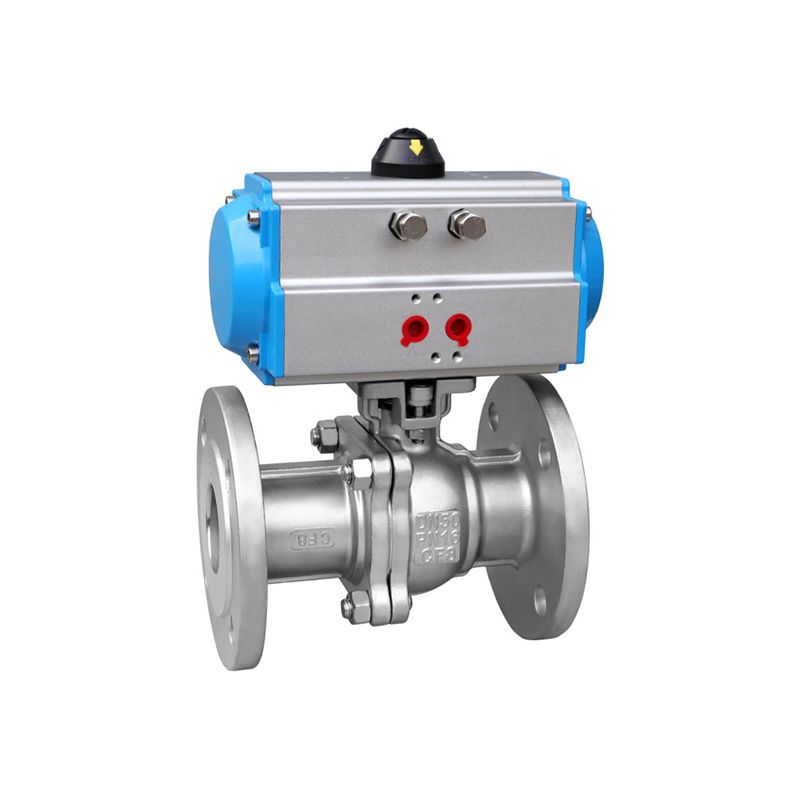
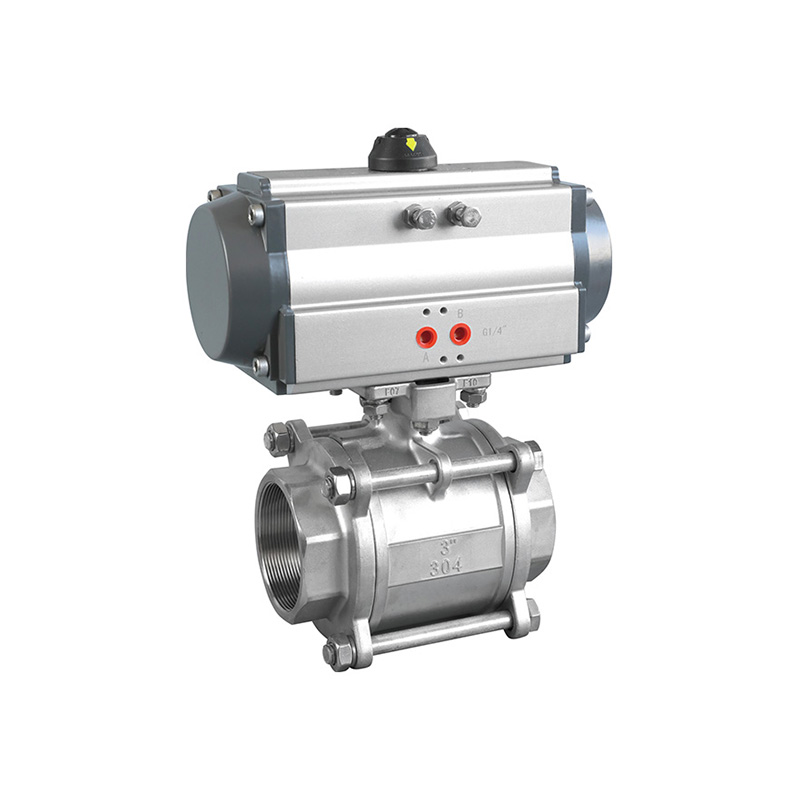
Pneumatic Flanged Ball Valve Supplier
Air source actuated with fast opening & closing response. Equipped with solenoid valves, limit switches, and positioners, it can connect to PLC and DCS industrial control systems to realize proportional regulation, remote signal feedback, and interlock cut-off.

About Us
Zhongchi Valve Group Co., Ltd.
Zhongchi Valve Group Co., Ltd. was established in April 2008. The company is a valve manufacturing enterprise that integrates design, development, production, and sales. It is located in the Binhai Industrial Park of Wenzhou Economic and Technological Development Zone.
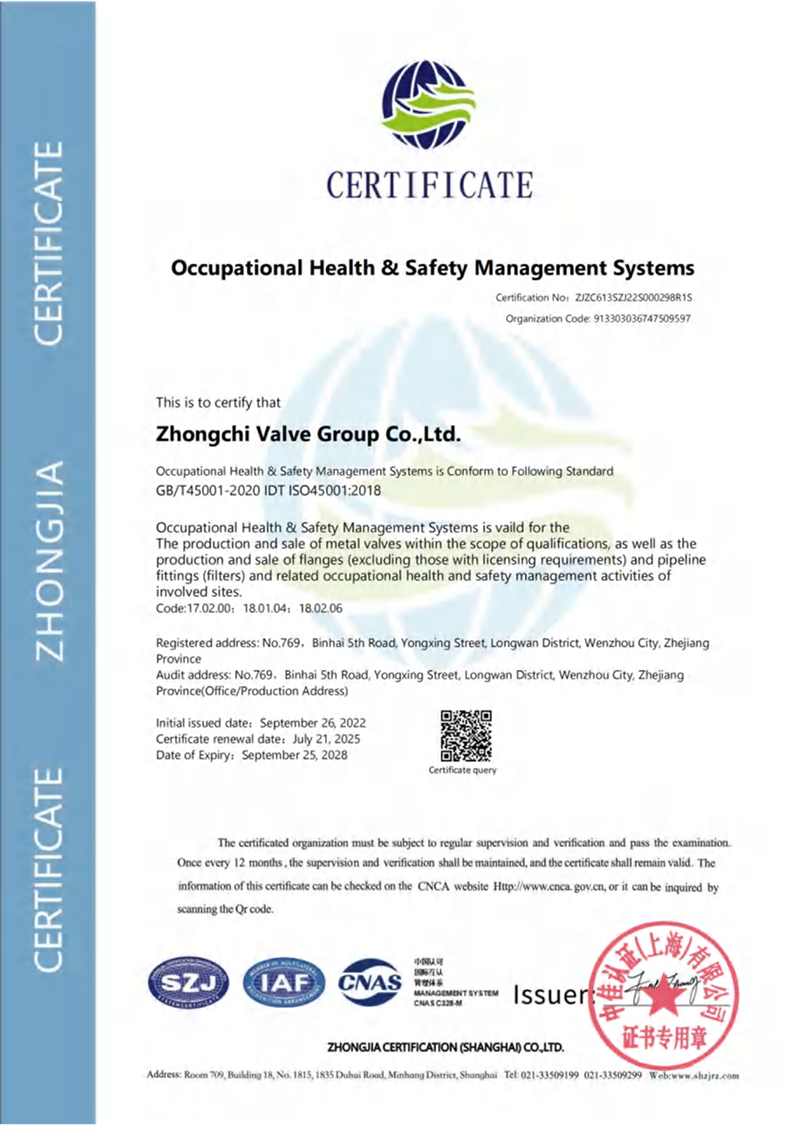
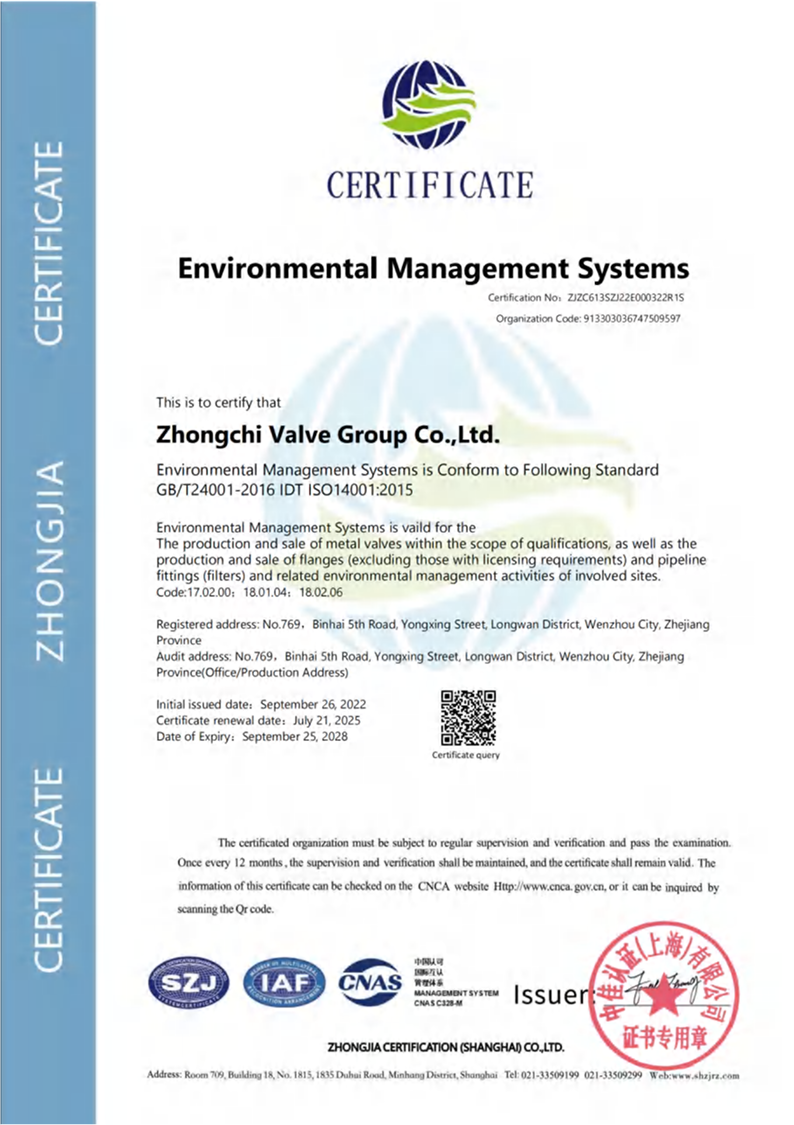
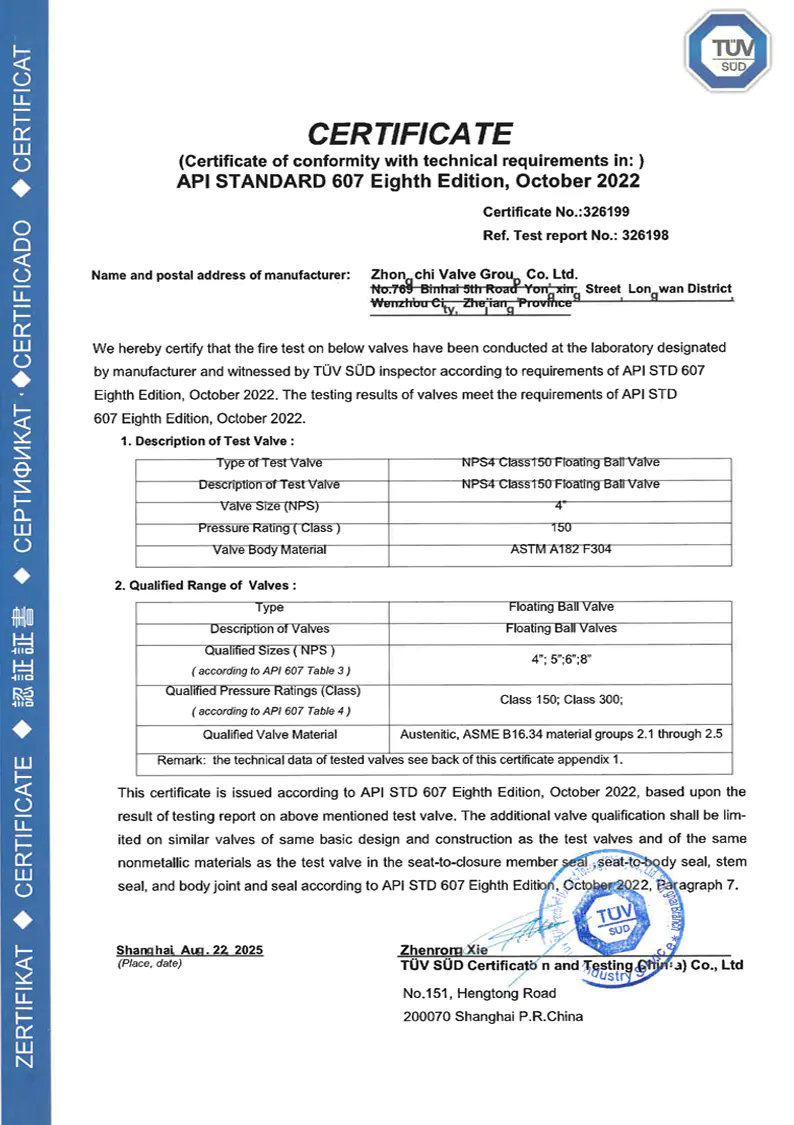
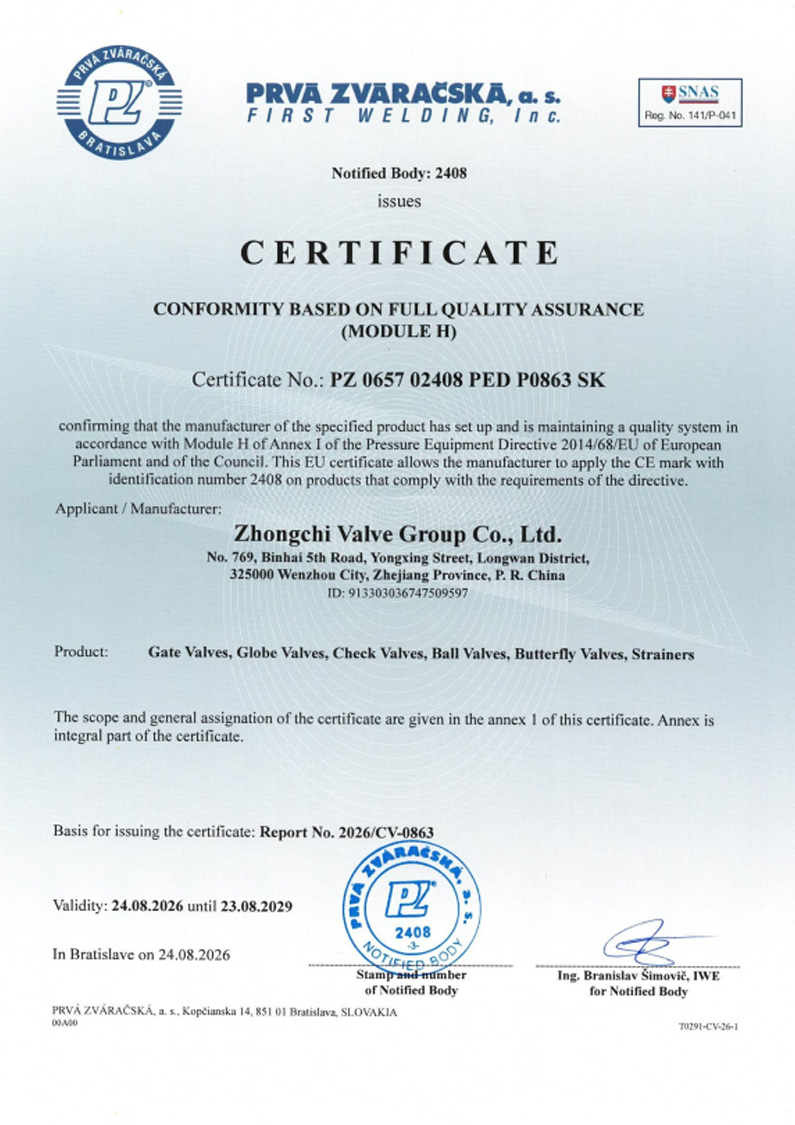
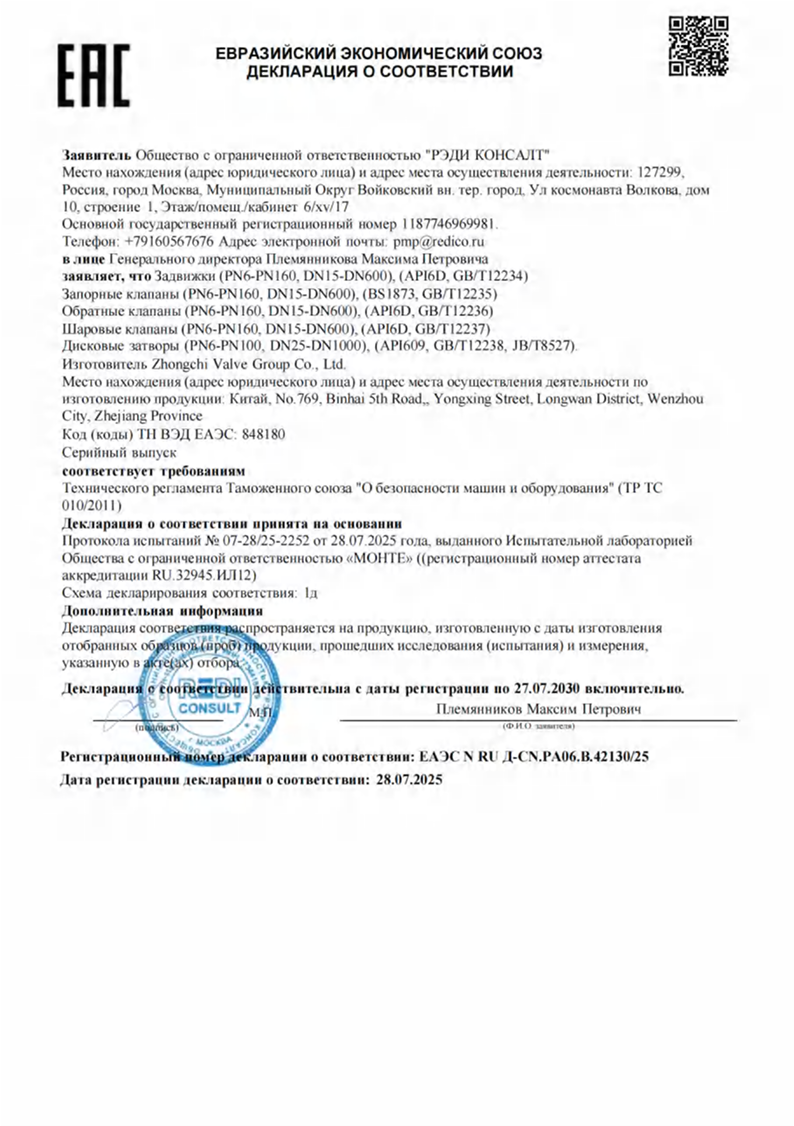
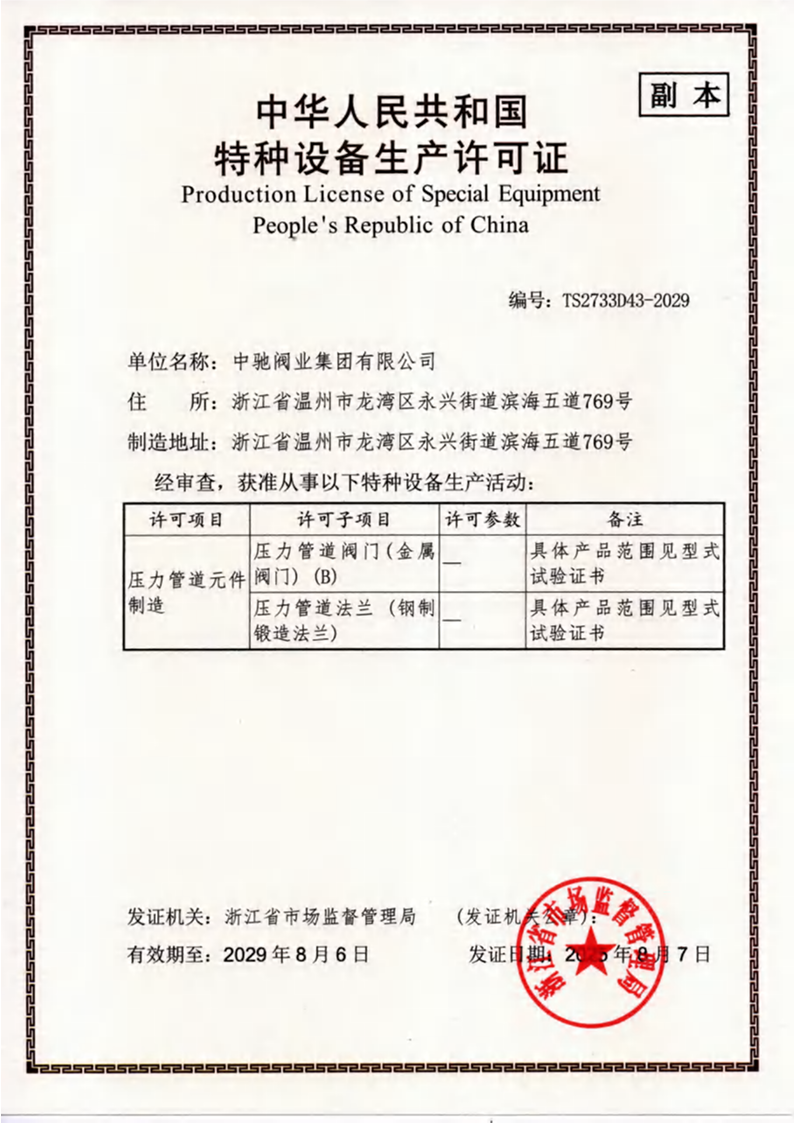
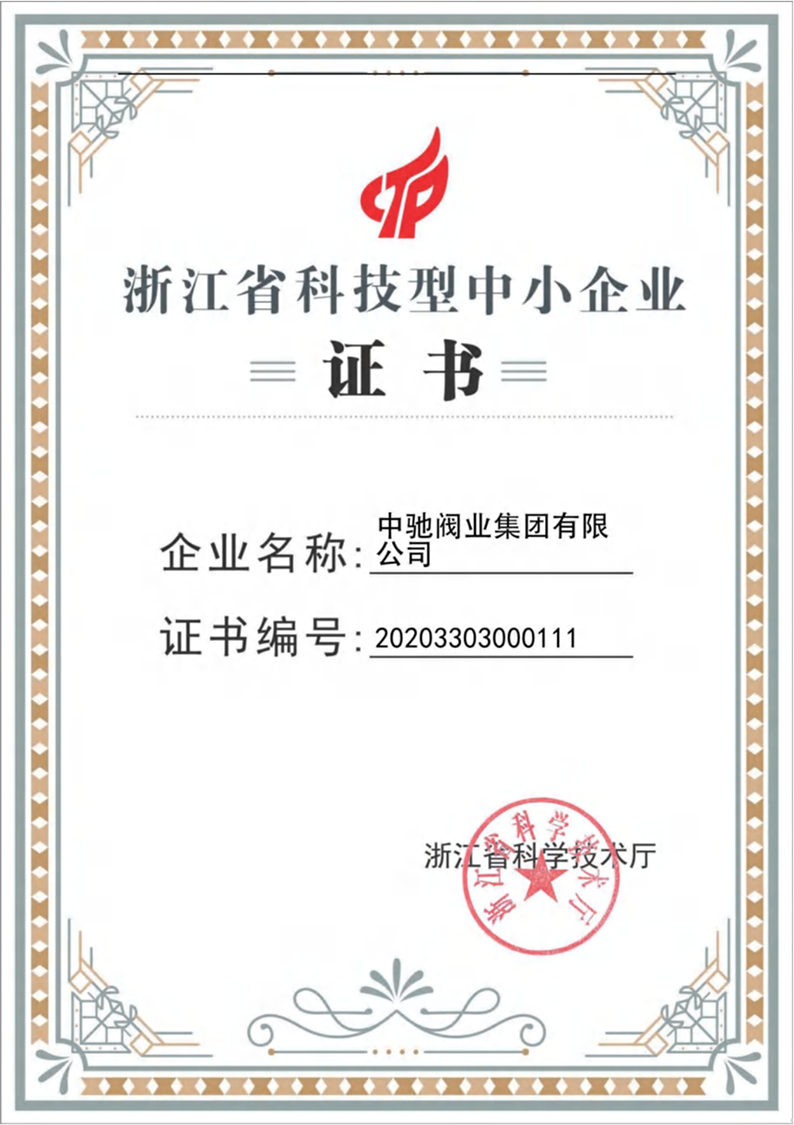
We provide customers with reliable quality assurance through advanced technology and scientific management, offers services with a complete range of products and a short delivery time, and strives to achieve the corporate goal of "building an excellent enterprise and creating a brand in the industry". The company has successively obtained ISO9001 international quality management system certification, ISO14001 environmental management system certification, ISO45001 occupational health and safety management system certification, special equipment manufacturing production license TS certification, CE certification, EAC certification, API607 fire protection certification, and has been recognized as a small and medium-sized technology enterprise in Zhejiang Province and a national high-tech enterprise.
The company's main products include ball valves, gate valves, globe valves, check valves, filters, butterfly valves, etc. These products are widely used in various industries such as petroleum, chemical, natural gas, light industry, electric power, pharmaceuticals, dyes, metallurgy, fiber, leather making, textile, food, military, construction engineering, refrigeration, water supply, and more.
We provide customers with reliable quality assurance through advanced technology and scientific management, offers services with a complete range of products and a short delivery time, and strives to achieve the corporate goal of "building an excellent enterprise and creating a brand in the industry". The company has successively obtained ISO9001 international quality management system certification, ISO14001 environmental management system certification, ISO45001 occupational health and safety management system certification, special equipment manufacturing production license TS certification, CE certification, EAC certification, API607 fire protection certification, and has been recognized as a small and medium-sized technology enterprise in Zhejiang Province and a national high-tech enterprise.
The company's main products include ball valves, gate valves, globe valves, check valves, filters, butterfly valves, etc. These products are widely used in various industries such as petroleum, chemical, natural gas, light industry, electric power, pharmaceuticals, dyes, metallurgy, fiber, leather making, textile, food, military, construction engineering, refrigeration, water supply, and more.
Stay Connected, Insights & Innovation from Zhongchi
-
 Industry News
 2026.09.25
Oil and gas valve procurement involves technical requirements that go well beyond valve size and pur...
2026.09.25
Oil and gas valve procurement involves technical requirements that go well beyond valve size and pur... -
Industry News
2026.09.25
Mesh size has an effect on what a Y‑type Flanged Strainer can retain. A finer mesh does not automati...
-
Industry News
2026.09.18
Ball valve procurement for oil, gas, chemical, and process applications involves more than choosing ...
-
Industry News
2026.09.18
Vertical piping creates a different operating condition for a check valve. Gravity affects the movem...
-
Industry News
2026.09.11
Three-way ball valves give piping systems more routing options without requiring separate valves for...
-
Industry News
2026.09.11
Global valve sourcing often involves several manufacturing regions, with China, India, and Korea ser...
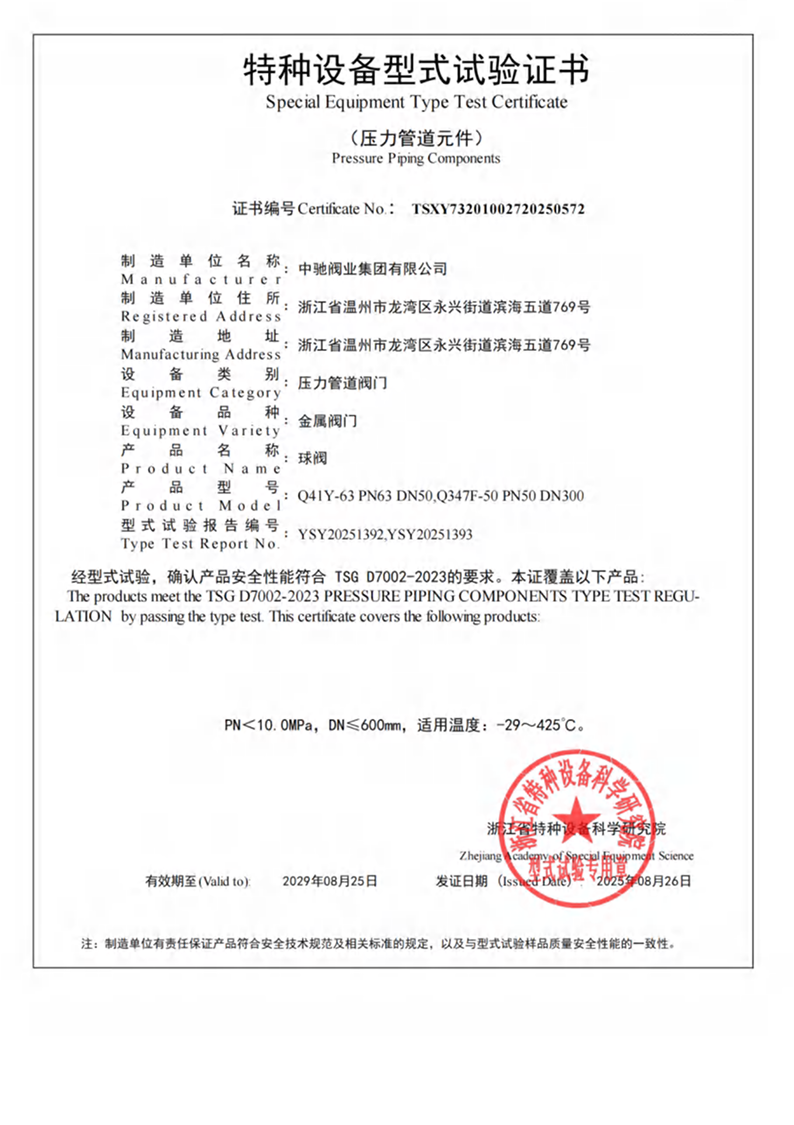
Certificate Of Honor
Pneumatic Flanged Ball Valves: Materials, Speed, and Key Features
Pneumatic flanged ball valves are a cornerstone of automated process control, combining the reliable shut-off of a ball valve with the speed and safety of pneumatic actuation. They are chosen for applications where remote control, rapid operation, and fail-safe functionality are essential. This guide examines their construction materials, actuation speed, and core features.
What Materials Are Used for the Pneumatic Flanged Ball Valve Body, Ball, and Seals?
The choice of materials directly impacts the valve's compatibility with the process media, temperature, and pressure. There is no single standard, as manufacturers select materials based on the specific application requirements.
Body Materials:
- Stainless Steel (e.g., ASTM A351 CF8M, 1.4408): This is a common choice for its excellent corrosion resistance and durability in demanding environments. It is often preferred for chemical and high-temperature applications. A two-piece body design, where the valve body is in two halves, is a standard configuration for many industrial valves.
- Cast Steel: A robust option used for high-pressure applications. Valves with a cast steel body can be rated to higher pressure classes, such as PN40.
- Other Materials: For less demanding or specialised services, bodies can be made from other materials, such as brass or ductile iron, to balance cost and performance.
Ball Materials:
The ball is the rotating element that controls flow. It must be hard and wear-resistant.
- Stainless Steel (e.g., 1.4408): This is the most widely used material for the ball in industrial valves, offering good strength and corrosion resistance.
Seal Materials:
Seals are critical for preventing leaks and ensuring a bubble-tight shut-off.
- PTFE (Polytetrafluoroethylene): PTFE is a standard seal material prized for its wide temperature range and excellent chemical resistance. It is commonly used for both ball seats and stem seals.
- TFM 4215 with Carbon Fill: An advanced PTFE variant, reinforced with carbon. This material is specifically chosen for high-temperature applications to improve mechanical strength and reduce wear.
- FKM (Fluorocarbon Rubber): Also known by the trade name Viton, FKM is often used with PTFE to create seals that can handle higher temperatures and specific chemicals.
- Specialized Packing: For high-temperature services, stem sealing might use a material like Grafoil (flexible graphite), which can withstand extreme heat.
| Valve Component | Common Material Options | Key Properties & Applications |
| Body | 316 Stainless Steel (CF8M / 1.4408) | Excellent corrosion resistance; ideal for chemicals, food, and high temperatures. |
| Cast Steel | High strength; suitable for high-pressure (PN40+) industrial systems. | |
| Ball | Stainless Steel (1.4408) | Hard, wear-resistant, and corrosion-resistant; the standard choice for durability. |
| Seats / Seals | PTFE / R-PTFE | Broad chemical compatibility, low friction; general-purpose sealing. |
| Carbon-Filled PTFE | Enhanced mechanical strength for higher temperature and pressure service. | |
| FKM / FKM + PTFE | High-temperature resistance and oil/solvent compatibility. | |
| Grafoil / Graphite | Extreme temperature resistance; used for stem packing in high-heat applications. |
How Fast Does a Pneumatic Actuated Ball Valve Open and Close?
The speed of a pneumatic actuated ball valve is one of its primary advantages, significantly outperforming electric actuators in this regard. The exact opening and closing time depends on the actuator size, air pressure, and whether speed controls are used.
- Extremely Fast (Less Than 1 Second): Many compact and standard pneumatic actuators are designed for rapid operation. The cycle time for these units is typically under one second. For instance, some specialized 3-way vacuum valves can close in just 2.7 milliseconds, although this is at the extreme high-performance end.
- Very Fast (0.05 - 2 Seconds): Pneumatic ball valves are often referred to as "quick cut-off" valves due to this capability, with some specifications noting a switching speed of 0.05 seconds per cycle. For larger valves, the stroke time is longer but still fast, often ranging from 0.2 seconds for smaller sizes up to 4.0 seconds for very large units, with a typical under-one-second cycle for most applications.
The actuation speed can be adjusted to prevent water hammer or other system stresses. Manufacturers achieve this by integrating speed control valves into the pneumatic circuit, allowing the user to tailor the opening and closing time to the specific process needs.
What Is a Pneumatic Actuated Flanged Ball Valve and What Are Its Key Features?
A pneumatic actuated flanged ball valve is an automated valve system combining two main components: a ball valve and a pneumatic actuator.
The Ball Valve
The valve itself is a quarter-turn device. A spherical ball with a central bore rotates 90 degrees to either align the bore with the pipe (open) or block the pipe (closed), providing reliable shut-off. Flanged refers to the end connections, where the valve is bolted between two pipe flanges, ensuring a secure, high-integrity connection suitable for a wide range of pressures and sizes.
The Pneumatic Actuator
This is the power unit that automates the valve. It uses compressed air as its energy source to turn the valve stem. Actuators come in two main types:
- Double-Acting: Uses air pressure to both open and close the valve. It requires air supply lines for both actions.
- Single-Acting (Spring-Return): Uses air pressure to move the valve in one direction and a spring to return it to its "fail-safe" position when air supply is lost. This is a critical safety feature for ensuring a valve opens or closes in an emergency.
Key Features:
Automation and Remote Control: Enables control from a central location or via a PLC system. This improves safety by removing personnel from hazardous areas and saves time.
Modular Accessories: The actuator is typically built with a standard interface (e.g., NAMUR) for easy mounting of automation accessories. Common accessories include:
- Solenoid Valves: Pilot valves that direct air to the actuator for remote electrical control.
- Limit Switches: Provide electrical feedback to confirm the valve's open or closed position.
- Positioners: Allow for modulating (throttling) control by precisely positioning the ball.
Safety and Reliability:
- Blow-Out Proof Stem: A design feature that prevents the stem from being forcibly ejected under pressure.
- Anti-Static Devices: Ground the ball, stem, and body to prevent static electricity buildup, a critical feature in explosive environments.
Performance: Offers full-bore flow (minimal pressure drop) and is 100% factory tested before dispatch to ensure operational integrity.
Get a Free Quote
Quick Links
Products
Contact Information
-
 +86-13396775805
-
 +86-577-86934868
-
 cn@cnchivalve.com
-
 No. 769, Binhai 5th Road, Yongxing Street, Longwan District, Wenzhou City, Zhejiang Province, China
Copyright © Zhongchi Valve Group Co., Ltd.All rights reserved.
 Industrial Pipeline Valve Manufacturer